
Trommel vs. Shaker Screen: Which Screening Equipment Do You Need?
Home Blog
Trommel vs. Shaker Screen: Which Screening Equipment Do You Need?

Trommel vs. Shaker Screen: Which Screening Equipment Do You Need?
- September 16, 2026
Picking the right screening equipment for construction and demolition work matters just as much as picking the right crusher. A crusher only breaks material down; the screen is what turns that broken material into a graded, sellable product. On most job sites and recycling yards, the decision usually comes down to two options: a rotating trommel or a vibrating shaker deck. Get the match wrong, and you’ll fight clogged mesh, slow throughput, or oversized piles you can’t move. Get it right, and screening becomes one of the most profitable steps in your process. This guide walks through the trommel vs shaker screen decision so you can match the equipment to your material instead of the other way around.
What's the Difference Between a Trommel Screen and a Shaker Screen?
In simple terms, a trommel screen sorts material inside a rotating drum, while a shaker screen (also called an incline or vibrating screen) sorts material on a flat or angled deck that shakes to push particles through mesh openings. When people ask about trommel screen vs vibrating screen performance, moisture is usually the deciding factor: trommels tend to outperform on wet, sticky, or organic loads, while shaker decks generally win on dry aggregate at higher volumes. The sections below break down how each machine operates, along with where each one shines and where it falls short.
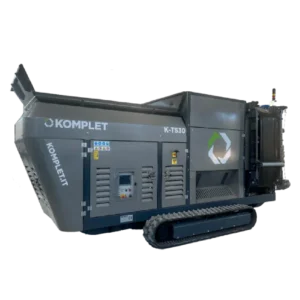
How Trommel Screens Work
A trommel, sometimes called a rotary screen, earns its keep on material that resists flowing through a flat deck.
How it operates: The drum sits at a gentle incline and spins continuously. Material enters at the raised end, and as the drum rotates, undersized pieces drop through the perforated shell while everything too large keeps moving toward the discharge point.
Where it performs best: Topsoil, mulch, compost, and green waste are classic trommel jobs. It also holds up well on clay-heavy or damp recycled concrete and demolition debris that would otherwise cake onto a flat screen.
Strengths:
- Tumbling action inside the drum breaks apart clumps instead of letting them sit on the surface.
- Handles wet, sticky loads with far less blinding than a mesh deck.
- Simpler mechanical design generally means fewer wear points to manage.
- Runs quieter than most vibrating equipment.
Trade-offs:
- Throughput on dry, free-flowing aggregate usually lags behind a comparable shaker screen.
- Producing several distinct size fractions at once is harder with a single drum than with a multi-deck shaker.
- Drum dimensions cap how many tons per hour the unit can realistically process.
How Shaker (Vibrating and Incline) Screens Work
For contractors processing large volumes of dry material, a shaker or incline screen is typically the default choice.
How it operates: One or more mesh decks are set at an angle and driven by a vibrating motor or hydraulic unit. Material travels across the moving deck, dropping through each successive mesh layer according to size while the leftover oversize continues to the discharge chute.
Where it performs best: Crushed concrete, asphalt millings, natural stone, sand, and gravel all move efficiently across a vibrating deck, especially when you need two or three graded sizes out of a single pass.
Strengths:
- Moves dry, free-flowing material faster than a trommel of comparable size.
- Multi-deck setups split output into several spec sizes in one operation.
- Mesh panels can be swapped to hit a different gradation as job specs change.
- Available in track-mounted, wheel-mounted, and excavator-bucket configurations for different site conditions.
Trade-offs:
- Wet or clay-laden material can blind the mesh quickly, dragging production down.
- Vibrating components produce more noise and mechanical wear than a rotating drum.
- Fine mesh decks need more frequent cleaning to stay productive.
Rotary Screen vs Incline Screen: Matching the Machine to the Material
Neither machine wins across every application, so the smarter approach is matching equipment to what you’re actually processing.
- Topsoil, compost, and organic debris: A trommel is generally the better call given how wet and clumpy this material tends to be.
- Crushed concrete, asphalt, and rock: An incline shaker screen usually delivers better throughput and tighter size control on dry, angular material — making it a strong pick if you’re searching for the best screener for recycled aggregate.
- Small crews and excavator-based work: A vibratory screening bucket lets you sort material right off the excavator without hauling in a standalone plant.
- High-volume yards: A multi-deck incline plant is typically the more efficient route when several spec sizes need to come out at once.
- Mixed or inconsistent material streams: Some operations run a mobile trommel screener for concrete recycling alongside a shaker plant, or lean on a crusher with built-in screening to cover more ground with fewer machines.
Frequently Asked Questions (FAQs)
- What’s the real difference between a trommel and a shaker screen? A trommel separates material inside a rotating perforated drum. A shaker screen uses a vibrating deck to push material through mesh layers. Trommels generally handle wet or sticky material better, and shaker screens typically move more dry aggregate per hour.
- Is a trommel or shaker screen better for recycled concrete? Dry, crushed concrete usually processes faster and cleaner on a shaker/incline screen, which can also split it into multiple sizes at once. If the concrete is wet or mixed with clay and organic debris, a trommel screen may be the stronger option.
- Can a crusher screen material without a separate screening plant? Yes. Some machines, including the Rebel Crusher, include onboard screening that sorts material into multiple stockpiles while it crushes, which can reduce or remove the need for a standalone screen on smaller jobs.
- Which type of screen requires less maintenance, a trommel or a shaker? Trommels tend to have fewer moving parts and resist blinding better, while shaker screens offer quicker mesh changeovers. Actual maintenance demands depend more on the specific model and the material you’re running than on the screen type alone.
Finding the Right Screening Equipment for Construction and Demolition Work
Whether a trommel or a shaker screen is the better fit for your operation comes down to material, moisture, and the volume you need to move. R.R. Equipment stocks both screen types, so you’re matched with the right machine instead of forcing one piece of equipment to handle every material that shows up on site.
For wet, organic, or clumpy loads, look at our Komplet K-TS Trommel Screeners or the Okada TMB Series Trommel Bucket Attachment for excavator-based setups. For dry aggregate, crushed concrete, and higher-volume production, our ScreenKing Mobile Screen Plant and ScreenKing Portable Screen Plant deliver 2 or 3-deck incline screening in track-mounted or trailer-mounted formats. Smaller sites can rely on the Swing-Screen Bucket Screener Attachment, which mounts directly to an excavator for on-the-spot screening without a standalone plant.
Looking for one machine that crushes and screens in a single pass? Check out the Rebel Crusher, which separates material into three stockpiles while it crushes.
Contact us to talk through your material and production goals, and our team will help you land on the right screening equipment for your operation.