Labor shortages have transformed from temporary disruptions into permanent operating conditions for construction and recycling contractors. Finding skilled workers grows harder each year, yet project demands and customer expectations continue rising. Small and mid-size operations face an impossible equation: deliver large-scale output with minimal crew sizes while competing against better-staffed competitors. Portable radial stackers are rewriting this equation, giving lean teams the material handling equipment they need to punch far above their weight class.
The Small Crew Challenge: Competing Against Larger Operations
Running a three or four-person crew in today’s aggregate and recycling industry means constant battles with basic physics. Manual material handling consumes enormous amounts of time and energy. Workers spend hours moving processed material with loaders or skid steers, work that produces zero value but demands full attention and equipment resources. Meanwhile, larger competitors with dedicated material handlers and multiple operators process the same volumes with less effort and faster turnaround.
The labor market intensifies these challenges. Skilled equipment operators command premium wages when you can find them at all. Younger workers increasingly avoid physically demanding construction careers. Immigration policy shifts affect workforce availability. These converging trends leave small contractors perpetually understaffed, forcing difficult choices between accepting smaller projects or exhausting existing crew members trying to handle work beyond their capacity.
Larger operations gain efficiency through specialization and equipment investment. They assign dedicated personnel to material handling while others focus on crushing, screening, or quality control. They invest in conveyor stacking systems and automation that small crews simply couldn’t justify—until recently. This efficiency gap translates directly into competitive advantages during bidding and project execution, squeezing smaller contractors out of lucrative opportunities.
Physical limitations compound the problem. Even the strongest worker can only move so much material manually per shift. Fatigue accumulates, safety risks increase, and productivity inevitably declines as hours progress. Small crews hit output ceilings determined more by human endurance than equipment capacity, leaving processing machinery underutilized despite market demand for their services.
How Portable Radial Stackers Multiply Small Crew Output
Portable radial stackers fundamentally transform what small crews can accomplish by automating the most labor-intensive aspect of aggregate production: stockpiling and loading material. Instead of dedicating operators and equipment to moving crushed material, conveyors handle this task continuously and autonomously. A two or three-person crew suddenly operates like a five or six-person team, without additional payroll or recruiting headaches.
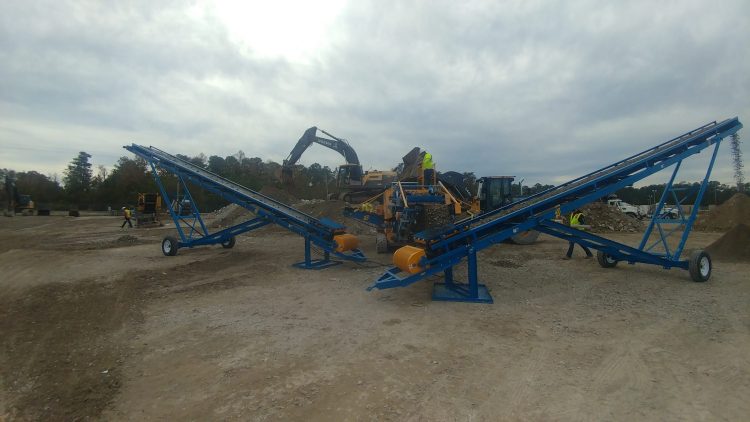
The radial capability delivers exceptional flexibility within this automation. Traditional straight conveyors create linear piles requiring frequent repositioning. Radial designs pivot through wide arcs, creating conical stockpiles covering substantial areas without moving the conveyor itself. This means uninterrupted material flow while crushing operations continue at full capacity—your portable radial stacker works tirelessly while your crew focuses on running and maintaining primary processing equipment.
Speed advantages over manual methods prove dramatic in real-world conditions. Where a loader might cycle every few minutes to move material, conveyor systems handle continuous flow measured in tons per hour. An operator who previously spent entire shifts repositioning stockpiles now manages the overall operation, troubleshoots issues, performs quality checks, and handles customer interactions. The same crew accomplishes in one day what previously required two or three, fundamentally changing project economics.
Physical demands on crew members plummet when aggregate stockpiling solutions eliminate repetitive material handling. Workers stay fresher throughout shifts, safety incidents decrease, and job satisfaction improves. This matters enormously for retention—good employees stick around when they’re not physically destroyed by workdays spent wrestling loaders through endless stockpile adjustments.
Real-World Applications Where Radial Stackers Make the Difference
Crushing and screening operations gain the most immediate benefits from portable radial stackers. When processing concrete, asphalt, or natural aggregates, material flows continuously from the crusher through screens and onto stockpile conveyors. Small crews maintain steady production without constant interruptions for material handling. A single operator can oversee the entire flow, making real-time adjustments to ensure consistent output quality while the radial stacker builds properly sized stockpiles ready for customer loading.
Recycling yards handling construction and demolition debris discover new efficiency levels with conveyor stacking systems. Incoming material gets processed and immediately conveyed to designated stockpile areas organized by size and type. Without radial stackers, small crews spend disproportionate time moving material between processing and storage areas. With them, material handling happens automatically, letting crews focus on maximizing throughput and maintaining equipment rather than endlessly repositioning piles.
Aggregate production sites, including quarries and sand and gravel operations, leverage portable radial stackers to compete more effectively with larger producers. Even modest operations can maintain multiple stockpiles of different size fractions simultaneously. This product variety attracts customers who might otherwise source exclusively from major suppliers, opening market opportunities previously unavailable to smaller producers.
Demolition and construction site contractors find portable radial stackers particularly valuable for temporary processing operations. When crushing concrete on-site for reuse or processing materials before hauling, efficient stockpiling proves critical. Small crews can set up complete processing and stockpiling systems, handle substantial volumes, then quickly demobilize and move to the next project—all without the crew sizes larger contractors typically require.
Cost-Effectiveness: ROI for Small to Mid-Size Contractors
Labor cost analysis reveals compelling returns on material handling equipment investment. Consider a small contractor paying an equipment operator $25-35 per hour including benefits. If stockpiling tasks occupy one operator full-time, that’s $50,000-70,000 annually just for material handling. A portable radial stacker eliminates this dedicated position, allowing that operator to focus on higher-value activities or enabling the contractor to handle more volume with the same crew size.
Productivity increases per crew member multiply the labor savings. When three people accomplish what previously required five, your labor cost per ton of processed material drops dramatically. These efficiency gains flow directly to competitive positioning—you can bid more aggressively while maintaining healthy margins, or keep pricing stable and capture superior profits. Either way, small crew efficiency powered by automation creates strategic advantages.
Equipment investment costs have become increasingly accessible for small to mid-size contractors. Quality portable radial stackers now start around $30,000, representing manageable capital expenditure even for modest operations. When compared to hiring and maintaining additional personnel—with all associated payroll taxes, insurance, training, and turnover costs—equipment investment often breaks even within the first year of operation.
Competitive bidding advantages emerge quickly once radial stackers join your equipment fleet. You can credibly pursue larger projects previously dominated by better-equipped competitors. Your proposals demonstrate serious processing capacity despite small crew sizes. Customers recognize that automated material handling translates to faster project completion and lower costs, making your bids more attractive even against established larger operations.
Choosing the Right Portable Radial Stacker for Your Operation
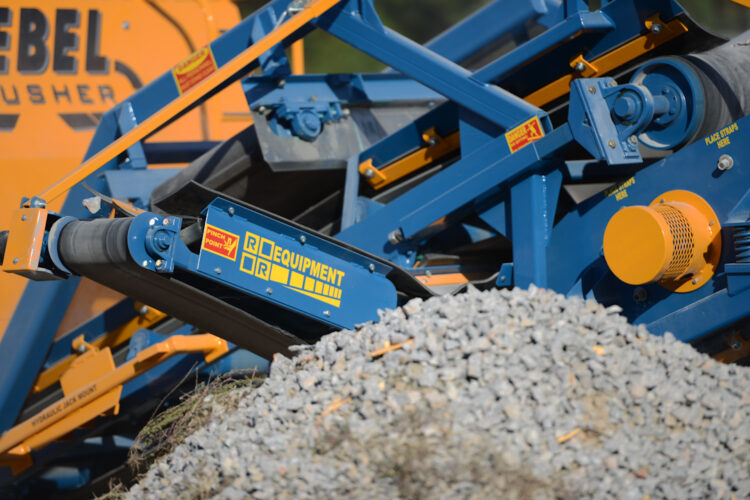
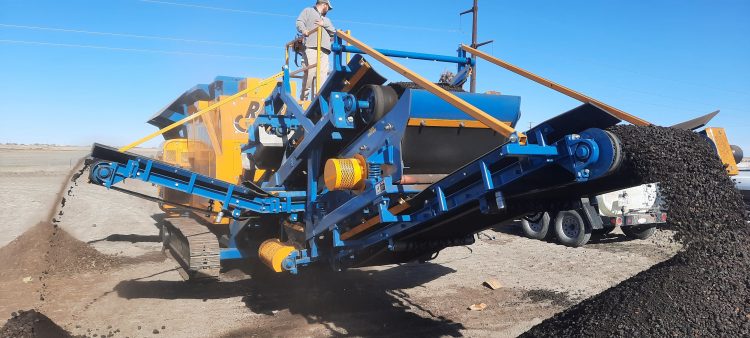
Capacity considerations should align with your existing crushing and screening equipment output. A crusher producing 50-100 tons per hour requires conveyor capacity to match, ensuring continuous material flow without bottlenecks. The Rebel Crusher Portable Radial Stacker, for example, features a 40-foot length capable of creating stockpiles up to 14 feet high—substantial capacity suitable for serious production operations yet manageable for small crews.
Material types you regularly process influence conveyor specifications. Aggregates, recycled concrete, asphalt millings, and crushed stone each present different handling characteristics. Quality radial stackers accommodate diverse materials without constant adjustments, maintaining productivity whether processing angular rock or more cohesive recycled materials. Belt width, typically 18 inches for portable models, balances capacity with portability.
Portability and setup requirements matter enormously for contractors moving between job sites or reconfiguring plant layouts seasonally. Look for designs featuring wheels and tires for easy repositioning, manual raise/lower capability for transport, and reasonable overall weight—around 10,000 pounds represents the sweet spot between robust construction and manageable mobility. Quick-connect hydraulics and simple controls enable small crews to deploy and redeploy equipment efficiently.
Integration with existing equipment determines practical usability. The best portable radial stackers position directly under discharge conveyors from screening equipment, creating seamless material flow from processing to stockpiling. The Rebel Crusher Portable Radial Stacker, designed specifically to work with the Rebel Crusher system, includes receiving hoppers and hydraulic connections for powered operation without requiring separate power sources—smart engineering that simplifies setup and operation for small crews.
Conclusion
Small crews no longer face inevitable disadvantages against larger, better-staffed competitors. Portable radial stackers deliver the force multiplication that transforms three-person operations into productivity powerhouses. By automating material handling—traditionally the most labor-intensive aspect of aggregate production—these aggregate stockpiling solutions let lean teams compete at scale previously impossible without substantial workforce expansion.
The economics work decisively in favor of equipment investment over hiring additional personnel. Lower operating costs, enhanced competitive positioning, and improved crew satisfaction combine to make portable radial stackers among the highest-return investments available to small and mid-size contractors.
Discover how the Rebel Crusher Portable Radial Stacker can transform your operation’s efficiency. Starting at $29,975, this 40-foot conveyor system creates up to 14-foot stockpiles while integrating seamlessly with your existing equipment. Contact R.R. Equipment today to learn how their portable radial stacker solutions can help your small crew deliver big output and compete confidently against any competitor.
Frequently Asked Questions
A quality radial stacker typically eliminates the need for one full-time equipment operator dedicated to material handling, allowing small crews to redirect labor toward higher-value production activities or handle increased volume with existing staff.
Yes, modern radial stackers process various material conditions effectively, though extremely wet or clay-heavy materials may require belt cleaning systems to maintain optimal performance throughout production runs.
Routine maintenance includes belt inspection and adjustment, lubrication of pivot mechanisms, and periodic examination of rollers and pulleys. Most small crews can handle these tasks in-house without specialized technicians.
Experienced two-person crews typically deploy portable radial stackers within 30-60 minutes, including positioning, connecting hydraulics, and making final adjustments—minimal downtime when moving between projects or reconfiguring plant layouts.