Coordinating equipment across multiple active projects creates headaches for construction managers and recycling operators. Machinery sits idle at one location while desperately needed elsewhere. Material transport expenses multiply across different sites. Project timelines extend as crews wait for processed aggregates. Mobile crushers are reshaping this landscape, delivering processing power wherever it’s needed most and transforming how businesses handle geographically distributed operations.
Why Multi-Site Operations Need Mobile Crushers
Companies running several concurrent projects face a common dilemma: how to efficiently process materials at each location without breaking the bank on logistics. The traditional model of trucking everything to a central facility creates a cascade of problems. Fuel costs accumulate rapidly. Drivers spend hours on the road instead of on productive tasks. Scheduling becomes a juggling act as multiple sites compete for the same trucks.
Portable concrete crushing equipment flips this model entirely. Rather than bringing materials to the crusher, you bring the crusher to the materials. This shift might seem simple, but its implications are profound for multi-site operations. Processing happens exactly where demolition, excavation, or material generation occurs, slashing the logistics burden dramatically.
The speed of deployment gives mobile crushers another edge. Unlike permanent installations requiring extensive site preparation, mobile units arrive ready to work. Within a morning, your crusher can be operational and producing specification material. When that project wraps up, relocation to the next site happens just as quickly. This agility means a single piece of equipment serves your entire regional operation rather than sitting underutilized at one location.
Material diversity across different projects poses no challenge for versatile mobile crushers. Tuesday finds your unit processing reinforced concrete from an office building demolition. Thursday it’s crushing recycled asphalt at a highway reconstruction project. Next week it handles natural stone or mixed aggregates at a different location entirely. This adaptability eliminates the need for specialized equipment at each site, dramatically simplifying your equipment fleet.
Cost Savings and Efficiency Gains Across Multiple Sites
Financial advantages multiply when mobile crushing machinery benefits are calculated across an entire multi-site operation. Transportation expense reductions appear first and most obviously. Every truckload that doesn’t need to travel between sites represents savings in diesel, driver time, vehicle wear, and insurance costs. For operations managing five or ten active sites simultaneously, these savings compound into substantial figures.
Productivity improvements extend beyond simple transport cost avoidance. Crews gain immediate access to processed material for reuse, accelerating project phases that depend on crushed aggregates. Road reconstruction projects particularly benefit—recycled asphalt or concrete becomes available for base layers without delay. Project schedules tighten, overhead costs decrease, and customer satisfaction improves.
Equipment investment returns grow when utilization rates climb. Instead of letting a crusher sit inactive during slow periods at one site, you redeploy it where material stockpiles have built up. Smart scheduling across your project portfolio keeps the machine productive, maximizing the value extracted from your capital investment. This dynamic allocation proves impossible with stationary facilities tied to single locations.
Mobilization costs between projects shrink to negligible levels compared to permanent plant alternatives. Setting up a stationary crusher requires days of work and often permits specific to that location. Mobile units sidestep these obstacles entirely, maintaining momentum as your company moves from one contract to the next. This operational fluidity translates directly into competitive advantages when bidding new work.
Key Industries Transforming Multi-Site Work with Mobile Crushing
Dense urban environments with active redevelopment create ideal conditions for on-site material processing. When multiple structures undergo demolition across a city, mobile crushers deliver processing capability to each location individually. Neighborhood disruption stays minimal. Truck traffic through residential areas decreases substantially. Project managers gain control over their material processing timeline rather than depending on external facility availability.
Emergency response scenarios following hurricanes, earthquakes, or floods demand rapid material processing across wide areas. Communities need debris cleared from numerous locations simultaneously to begin rebuilding. Mobile crushers move from street to street, transforming rubble into usable aggregate that supports reconstruction efforts. The equipment’s portability becomes critical when infrastructure damage limits transportation options.
Recycling enterprises serving construction and demolition contractors benefit enormously from bringing services directly to material sources. Rather than requiring customers to deliver concrete or asphalt to a yard, recycling companies dispatch mobile units to contractor yards or project sites. This customer-focused approach expands market reach while reducing client costs, creating win-win business relationships.
Extractive industries operating multiple quarries or mines across a region deploy mobile crushers to optimize haul distances. Processing material near the pit face rather than trucking it miles to a central plant cuts diesel consumption and equipment needs substantially. As extraction moves to different areas within a property or between properties entirely, crushers relocate to maintain efficiency.

Mobile Crushers: Comparing Jaw and Impact Solutions for Multi-Site Work
Selecting the right crusher type for distributed operations requires understanding how jaw and impact designs serve different applications. Jaw crushers excel at primary reduction of large, heavy concrete chunks and natural stone. Their robust construction and simple mechanical design make them ideal for processing oversized demolition debris, foundation concrete, and hard rock materials. For multi-site operations where projects involve primarily large material reduction, jaw crushers deliver reliable performance with lower operating costs.
Modern mobile jaw crushers have evolved significantly beyond traditional models. Many contemporary designs produce well-graded material suitable for immediate reuse as base material, not just coarse aggregate. When evaluating jaw crushers for multi-site work, examine manufacturer specifications carefully—newer models engineered specifically for recycling applications generate more versatile output than older primary crushing designs.
Impact crushers bring different strengths to multi-site crushing operations. They produce finer, more uniform material gradations by fracturing concrete and asphalt through high-speed rotor impact rather than compression. This makes them particularly effective for recycling applications where specification aggregate is the end goal. Impact crushers also handle materials with embedded rebar effectively when equipped with appropriate magnetic separation systems.
The choice between jaw and impact crushing often depends on your typical project mix. Operations handling predominantly large concrete demolition across multiple sites may favor jaw crushers for their simplicity and ability to process oversized material. Companies focused on producing recycled aggregates meeting specific gradation requirements might prefer impact designs. Many successful multi-site operations maintain both types, selecting equipment based on each project’s specific material and output requirements.
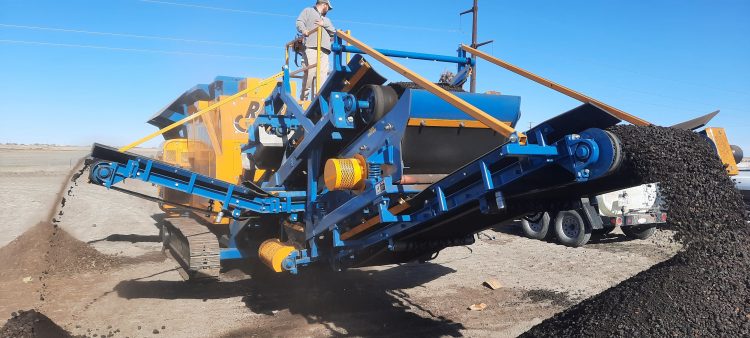
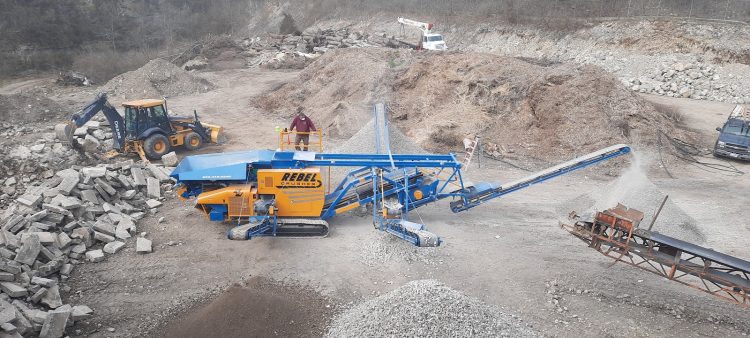
Brands like Komplet and R.R. Equipment offer mobile jaw crushers engineered specifically for contractors managing multiple sites. These machines balance processing power with portability, featuring track-mounted designs that relocate easily between projects. Their robust construction withstands frequent moves while maintaining consistent output quality across diverse applications and material types.
Choosing the Right Mobile Crusher for Your Operations
Matching crusher capacity to operational demands requires understanding typical project scales and how many sites need service simultaneously. Mobile units range from compact models handling smaller volumes to robust machines approaching stationary plant capabilities. Honest assessment of material quantities across your project portfolio guides appropriate equipment sizing.
Connected technologies increasingly separate premium equipment from basic alternatives. Remote monitoring platforms provide visibility into crusher performance regardless of which site it’s operating at currently. Diagnostic systems flag maintenance needs before breakdowns occur—critical when equipment operates at remote locations without constant supervision. These digital capabilities reduce downtime and extend service life across multi-site deployments.
Power source decisions balance upfront investment against long-term operating costs. Traditional diesel hydraulic systems offer proven reliability and lower purchase prices. Alternative fuel options including hybrid and electric powertrains reduce emissions and fuel consumption but command premium pricing. For businesses running equipment across numerous sites with varying project lengths, conventional power systems often provide the best combination of flexibility and dependability.
Investment analysis should capture the full value mobile crushers bring to geographically distributed operations. Initial purchase costs represent only part of the equation. Calculate transportation savings across all sites. Factor in productivity improvements from on-site processing. Consider the competitive edge gained from offering customer-convenient mobile services. These combined benefits typically justify equipment investment within reasonable payback periods.
Conclusion
Mobile crushers represent a paradigm shift for businesses managing crushing needs across multiple locations. By eliminating the transportation bottleneck and delivering processing capability wherever needed, these machines unlock efficiency gains impossible with traditional approaches. Whether your operation spans urban demolition projects, regional recycling services, or construction sites throughout a territory, mobile crushers provide the agility and cost-effectiveness that distributed work demands.
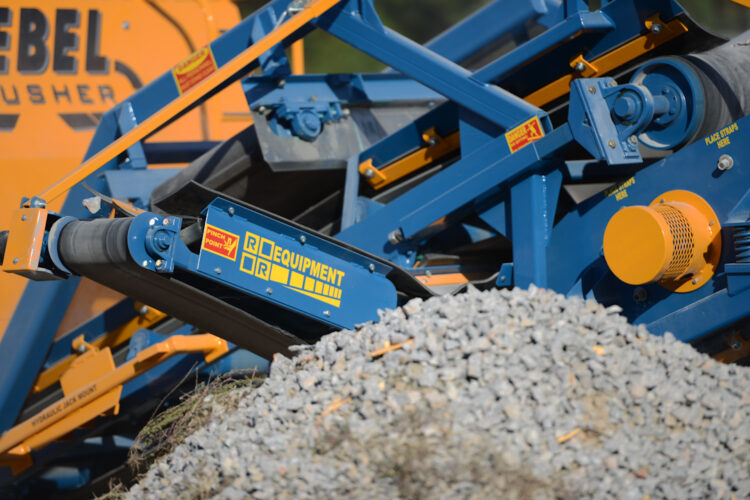
To discover how mobile crushing can revolutionize your multi-site operations, reach out to R.R. Equipment or investigate the capabilities of the versatile Rebel Crusher. The Rebel Crusher offers configuration options with either jaw or impact crushing systems, providing maximum adaptability to handle whatever materials your diverse project sites generate. Komplet also manufactures a full line of mobile jaw crushers designed specifically for contractors managing multiple locations efficiently.
Frequently Asked Questions
Mobile jaw crushers typically produce coarser to medium-sized aggregates ideal for base material, while impact-style crushers generate finer gradations. Modern jaw designs can produce well-graded material suitable for various construction applications.
Modern mobile crushers operate effectively in various weather conditions, though extreme environments may require operational adjustments. Their enclosed designs protect key components while maintaining productivity across seasonal changes.
Absolutely. Strategic scheduling allows a single mobile crusher to rotate among multiple sites based on material accumulation and processing priorities, maximizing equipment utilization across your entire operation.
Operators require comprehensive training on the specific crusher model, safety protocols, and material handling procedures. Once trained, they can effectively operate the equipment at any site within your project portfolio.