Why Mobility Matters When Waste Streams Change From Site to Site
Home Blog
Why Mobility Matters When Waste Streams Change From Site to Site
Why Mobility Matters When Waste Streams Change From Site to Site
- January 15, 2026
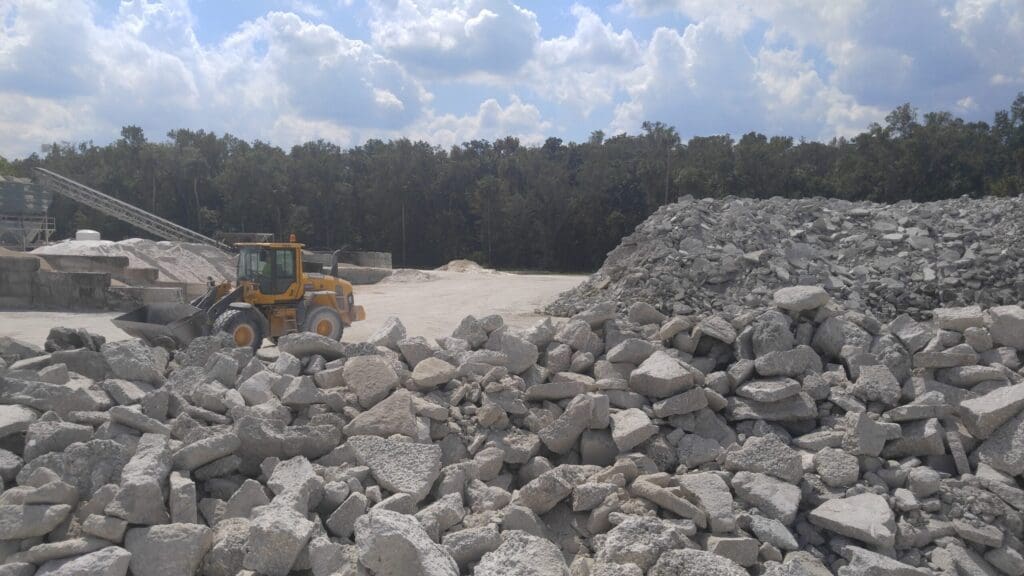
Every contractor knows the frustration of bidding diverse projects only to realize their equipment can’t handle the variety. Last month you processed clean concrete. This week you’re dealing with mixed demolition debris containing wood, drywall, and rebar-laden concrete. Next month brings an asphalt recycling job. Traditional stationary plants lock you into one location and one material type, forcing you to either pass on profitable work or invest in multiple specialized machines. The solution lies in understanding portable crushing equipment versatility and how mobile crusher flexibility transforms operations when waste streams change from site to site.
The Variable Waste Stream Processing Challenge
Today’s successful contractors don’t specialize in one material type or stay in one location. You bid on parking lot demolitions, building teardowns, and road reconstruction projects. Each job brings different materials—pure concrete slabs, asphalt with wire mesh, mixed demolition debris with wood and metal, or heavily reinforced structural concrete.
Traditional stationary crushing plants can’t adapt to this reality. They’re designed for consistent material streams in fixed locations. When you’re processing clean concrete at a quarry running the same material daily, a stationary plant makes sense. But contractors face constantly changing materials, and your equipment needs to change with it.
Why Stationary Plants Don't Work for Contractors
Stationary crushing plants excel at one thing: processing massive volumes of consistent material in a permanent location. For contractors moving between diverse projects, they create serious problems.
- Limited Adaptability: Stationary plants are engineered for specific materials. A plant optimized for crushing concrete performs poorly with asphalt. One configured for rock won’t efficiently handle mixed demolition debris. When your project portfolio includes diverse materials, you need equipment that adapts to variable waste stream processing demands.
- Geographic Constraints: Fixed plants require bringing material to them. That means loading trucks, paying drivers, burning fuel, and spending hours transporting material to a central location. When you’re working projects across a metro area or rural region, transportation costs quickly overwhelm any processing savings. You’re paying to haul material twice—once to the processor and again when you need it back.
- The Permitting Problem: Stationary plants require extensive environmental permits that can take months to obtain. If your work spans different counties or states, you’re either hauling material long distances or stuck without processing capabilities. Many contractors simply pay landfill tipping fees rather than navigate permitting nightmares.
Mobile Crusher Flexibility: Your Answer to Changing Requirements
Relocatable crushing solutions transform how contractors handle unpredictable material streams. Instead of maintaining relationships with multiple processing facilities, portable crushing equipment versatility lets you bring the right processing capability wherever work takes you.

The Komplet Krokodile: Built for Variable Waste Streams
The Komplet Krokodile mobile shredder exemplifies adaptable demolition equipment designed for contractors facing constantly changing materials. With its 220 HP diesel engine and dual-shaft design, this machine handles the material variety that makes or breaks profitability on diverse projects.
The Krokodile processes up to 175 tons per hour of C&D material, but its real value lies in what it can handle. Concrete with heavy rebar one day. Wood framing and drywall the next. Asphalt shingles mixed with roofing materials the following week. This versatility eliminates the need to own multiple specialized machines or coordinate with different processors for each material type.
Track-Mounted Mobility: The Komplet Krokodile moves on tracks between sites without requiring transport permits in most cases. When your crew finishes processing concrete at a commercial demolition, you move the same machine to handle asphalt at a road project or mixed materials at a renovation site. This approach means your equipment investment works harder across more project types.
Dual-Shaft Versatility: The shredder’s design handles materials that would jam or damage traditional crushers. One week you’re processing rebar-reinforced concrete. The next week it’s wood framing and drywall from a building gut-out. The following week it’s asphalt with wire mesh. The Komplet Krokodile’s dual-shaft design processes all of it without requiring different attachments or configurations.
How Relocatable Crushing Solutions Transform Your Operation
Adaptable demolition equipment changes the equation entirely. Instead of hauling diverse materials to a fixed location, you bring processing capability to wherever the work is.
Processing Different Materials Without Compromise
The Komplet Krokodile demonstrates portable crushing equipment versatility through its dual-shaft design with interchangeable configurations. One shaft setup optimizes C&D waste processing, while another handles wood and organic materials. Hydraulically adjustable side walls accommodate different material densities and sizes. The automatic reverse function clears bridging issues whether you’re processing rigid concrete slabs or flexible materials like carpet and insulation.
This adaptable demolition equipment produces outputs ranging from 3-1/4″ to 5-3/4″, suitable for most aggregate applications. The 220 HP diesel engine and slow-speed operation maintain efficiency across material types—you’re not burning excessive fuel just because Wednesday’s load is tougher than Tuesday’s.
Remote Control and Operational Flexibility: Radio remote operation means your loader operator controls all functions without approaching the machine. When material types change between sites, adjustments happen from the cab. Processing concrete? Adjust settings remotely. Next site has wood waste? Reconfigure on the fly. This mobile crusher flexibility eliminates the downtime and recalibration that plague stationary operations when material streams vary.
The Hidden Costs of Material-Specific Processing
Many contractors don’t calculate the true cost of matching their processing method to each site’s unique waste stream.
Without Mobile Equipment: Your crew demolishes a parking lot—pure concrete. You haul to a concrete recycling facility 30 miles away. Next, you’re tearing down a mixed-use building. That facility doesn’t accept wood, drywall, or other mixed materials. Now you’re making separate runs: concrete to one processor, wood to a mulching facility, mixed debris to a C&D sorting operation.
Each material type requires different processing facilities with different rates, multiple trucking routes and fuel costs, coordination with multiple vendors, variable processing timelines affecting your schedule, and material rejection risks if loads aren’t properly sorted.
With Mobile Equipment: Your Komplet shredder arrives Monday morning. You process concrete on-site. Wednesday, you reposition the equipment and begin processing the mixed building demolition. The shredder handles concrete, wood framing, drywall, and mixed materials in the same system. One machine, one operator, one set of logistics regardless of waste stream variations.
The cost difference compounds across projects. Every site you process saves trucking, tipping fees, and coordination complexity.
Multi-Site Crushing Operations: The Mobility Advantage
For multi-site crushing operations, mobility transforms from convenience to competitive necessity. Contractors managing multiple simultaneous projects or moving between diverse job types need equipment that travels as easily as their crews.
Transportation Reality: The Komplet Krokodile weighs 34,000 pounds with transport dimensions of 23′ x 7’2″ x 7’9″. Standard lowboy trailers handle it easily—no special permits, no escort vehicles, no route planning. You can move between sites the same day if needed.
Compare this to relocating a stationary crushing plant. Even modular stationary systems require multiple truckloads, extended setup time, and often permits for oversized components. By the time you’ve relocated a stationary plant, mobile equipment could have completed processing at three different sites.
Setup Speed Matters: Mobile crusher flexibility includes rapid deployment. The Krokodile’s tracked design means positioning takes minutes, not days. No foundation preparation. No complex assembly. Track it into position, unfold conveyors, and begin processing. When you’re done, fold it up and move to the next site.
Real-World Adaptability for Variable Waste Stream Processing
Variable waste stream processing represents the biggest challenge for contractors using stationary plants or material-specific equipment. Real projects generate unpredictable waste combinations that change not just site-to-site but sometimes hour-to-hour.
Material Transitions Without Downtime: Morning demolition exposes a concrete foundation—you’re processing heavy reinforced material. Afternoon work reaches the building’s wood framing and roof structure. Evening shift tackles asphalt parking areas. Adaptable demolition equipment processes all three without stopping for mechanical reconfiguration.
The Krokodile’s control system includes different shredding modes selectable via controls. Processing dense concrete? Select the appropriate mode. Switching to lighter wood waste? Adjust the mode. No mechanical changes, no lost production time.
Handling the Unexpected: Specifications rarely match reality. That “concrete-only” demolition includes rebar, wire mesh, expansion joints with tar, and embedded anchor bolts. Relocatable crushing solutions like the Krokodile accept materials up to 50 inches without requiring pre-processing. Long rebar pieces that jam jaw crushers? The dual-shaft shearing action handles them. Wire mesh that tangles in impact crushers? The automatic reverse function clears it.
Making the Business Case for Portable Equipment
Portable crushing equipment versatility creates value beyond traditional ROI calculations:
- Bid Competitiveness: When competitors coordinate with multiple processors for different material types, you quote single-source processing. Your bids reflect actual costs, not padded estimates covering material sorting and multiple disposal routes.
- Schedule Control: You’re not dependent on processor availability or coordinating trucking schedules. Process material when your crew generates it, not when some distant facility can accept it.
- Revenue Opportunities: That commercial demolition generating mixed waste? You’re processing and selling finished aggregate while competitors pay disposal fees. Material that was an expense becomes profit.
- Project Flexibility: You can confidently bid diverse projects knowing your equipment handles whatever waste streams emerge.
Frequently Asked Questions (FAQs)
Equip Your Operation for Any Site, Any Material
When waste streams change from site to site, mobility isn’t optional—it’s essential. Portable crushing equipment versatility gives contractors the adaptability to handle whatever materials each project presents without the complexity and expense of coordinating multiple processors or maintaining specialized equipment fleets.
R.R. Equipment offers the Komplet Krokodile and other mobile solutions designed specifically for contractors facing diverse material streams across multiple sites. With over 50 years of industry experience, we understand the challenges of variable waste stream processing and can help you select equipment that matches your operational reality.
Contact us at (803) 416-5200 to discuss how relocatable crushing solutions can improve your multi-site crushing operations. We’ll help you evaluate your typical material streams and project patterns to determine the mobile equipment configuration that delivers maximum versatility and profitability.